
The Green New Steal
Climate cronyism at its worst
Daniel Donnelly
3/14/20269 min read
Spring has finally sprung after a long and bitter winter here in New York. Finally we may see fewer “protest posts” on social media, at least until the summertime. Protest posts follow a simple formula; a utility customer receives a high post-consumption bill from the regional utility company, the customer complains on Facebook/NextDoor that the “bill is too damn high,” then the customer urges readers to contact a representative or agency of government to “do something” about the utility company’s high rates. Never does it occur to those who write such posts that government is the reason for these rate spikes in the first place!
Utility consumers in New York are better off than their counterparts in some other states. Ours is a “deregulated” state in terms of energy supply. Thus, bills for gas and electricity (“energy” hereafter) in New York are bifurcated, with a portion which invoices delivery, and another portion itemizing supply. It is the same in the deregulated neighboring states of New Jersey, Connecticut and Pennsylvania. Supply charges are the actual amount of energy consumed in the billing period, whilst delivery charges are the utility company’s costs to deliver the consumed energy, representing that consumption’s burden on the company’s infrastructure. New York’s deregulated energy market means that consumers have the freedom to choose energy suppliers other than the utility company. This opened the market to Energy Service Companies or ESCos which compete to supply the consumer’s energy. By contrast, in a regulated state like Arkansas, utility consumers have no such option, so there is no market for competing energy supplies.
Yet the government began to curtail this freedom of choice by degrees. In 2004 New York’s Public Service Commission (PSC) promulgated the Renewable Portfolio Standard, whereby 25% of energy from the deregulated market would have to come from renewable sources by 2013. Renewable sources encompass solar, wind, hydroelectricity, bio-gas and fuel cells, but not nuclear. By 2015 the percentage of renewably sourced energy was increased to 30%, which the PSC wants increased to 70% by 2030. In 2019, New York ratified the Climate Leadership and Community Protection Act, which commits this state to 100% renewables for electrical generation by 2040.
The governmental mandate in this case adversely affects energy’s price for two reasons. By plain economics, when wider demand meets narrower supply, the higher bidders get through the bottleneck first. In the energy market, extant consumers suddenly were required to fulfill their energy needs from fewer renewable suppliers, which obviously bid upwards the price per kilowatt supplied. Secondly by plain science, renewable sources cannot reliably produce the same amount of energy in each period when compared to non-renewable sources, as due to meteorological fluctuations which affect the amount of sunlight on solar panels or the breeze to spin wind turbines. This puts a premium on every renewable kilowatt supplied.
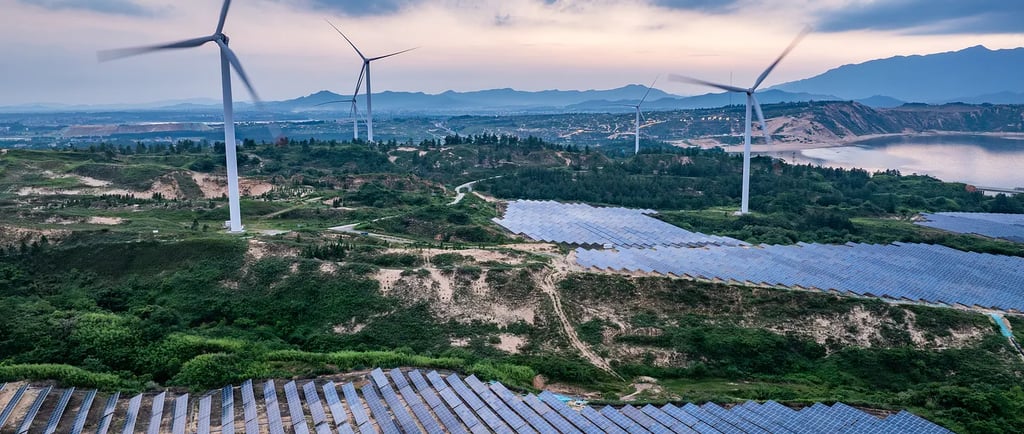
Of course, new suppliers are entering the market, as vast wind and solar installations (calling them “farms” is deceitful malapropism) sprawl across New York. The installations are being constructed rapidly – agriculture, zoning law and local opposition be damned. However, on the demand side, the recent surge in Artificial Intelligence (AI) requires the construction of more data centers, which in turn spikes energy consumption at a pace far exceeding renewable energy’s generation. The inevitable result of the government throttling supply in the face of escalating demand is… scalped utility customers’ futile protest posts in your newsfeed.
New York State recognizes that it victimizes its most vulnerable residents by corralling energy supply via the PSC’s policy on renewables. This is why New York offers the Home Energy Assistance Program (HEAP), which subsidizes energy costs to residents who qualify due to low income or adversity. This is the functional equivalent of a mafioso who breaks your leg, only afterwards to offer you crutches.
The government justifies its intervention in the energy market by citing climate change, by which the government means man-made environmental degradation. Climate change deems environmental degradation as droughts (but also floods) and a lengthening agricultural season (the period during which life-sustaining food is grown). Forty years ago, the term in vogue was the univariate “global warming” which tracked only global temperature. When the worldwide thermal average did not hockey-stick as dramatically as Al Gore had predicted from an elevated cherry-picker in An Inconvenient Truth (2006), “climate change” became the multivariate catchall. By designating a metric which encompasses several variables such as oceanic circulation, seismic activity and solar flares (that is, phenomena indisputably beyond humanity’s control) against the pre-industrial baseline for temperature, climate alarmists ensure that no reduction in anthropogenic energy output will ever satisfy the rubric.
Nevertheless, around the world there are droughts, floods and seismic disturbances, and some of these kill people. The question therefore becomes; how milder will these phenomena be after humanity’s carbon output matches the Earth’s carbon capture, a state which climatologists define as net zero? How many fewer people will perish in droughts, floods and seismic disturbances after all our energy is renewably sourced?
No one ventures to answer such questions. No approximate quantification is offered for the human lives saved by society transitioning fully to renewable energy. No serious predictions are attempted about how stable the worldwide environment will be when every vehicle is electrified and wind turbines loom over every city and township. No scientists explain why events like Europe’s Volcanic Winter of 536 A.D., Egypt’s apocalyptic Drought of 1200 A.D., and Britain’s Great Storm of 1703 – just three out of many recorded pre-industrial catastrophes – will be eliminated or rarer after the societal transition to renewables.
Instead we get the histrionics of Representative Alexandria Ocasio-Cortez (NY-14th) who captured headlines in January 2019 by predicting that climate change would destroy humanity worldwide in just twelve years unless we unquestioningly dumped trillions of tax dollars into renewables. AOC analogized climate change as her generation’s “World War Two.” Leveraging the publicity from this prediction, in early February 2019, junior Rep. Ocasio-Cortez (elected only three months earlier in response to the political action committee Justice Democrats’ casting call) proposed the Green New Deal.
The Green New Deal sought a complete overhaul of the economy to reduce “greenhouse gases” in architecture, agriculture, ranching, and a full transition to renewables. This would wean the USA off fossil fuels, cold turkey. Brand new public infrastructure would be needed, and private infrastructure would also be coerced into compliance with net zero. Continuing Rep. Ocasio-Cortez’s analogy of climate change to a world war, the resolution (H.Res.109, 116th) demands “national mobilization” of the economy towards the goal of rectifying “systemic injustices” (p. 3, ¶ 3) and thus includes a long progressivist wish-list of policies such as Universal Basic Income, nationalized healthcare, subsidized housing, raised minimum wage, etc. For a resolution which would irreversibly alter the USA’s economy and society, it was tellingly co-sponsored by 102 fellow Democrats, and 0 Republicans.
The Green New Steal
The alarmism for sustainability in the energy market accords no time to skepticism. Governments, major institutions and many corporations regard sustainability as beneficial in and of itself. To that end, there is less skepticism about sustainability’s costs and downsides, at least within the market for renewable energy as its proponents currently define it.
Yet no policy has value unless measured against objective and quantifiable benchmarks, and that means evaluating any drawbacks. Especially insofar as government is both cornering the energy market and subsidizing renewables, the citizenry as both consumer and taxpayer has every right to skeptical evaluation of sustainability and its implications on our economy.
For example, whenever proponents of renewables celebrate the construction of some photovoltaic array upon 100 acres of former farmland, the proponents always cite the array’s nameplate output across the next twenty years. If these proponents had more integrity, they would admit that “nameplate output” is the maximum potential of the array, presuming optimal conditions, which means the best-case scenario of the sun never setting in a cloudless sky for the next 20-25 years. Reality will markedly differ, thereby reducing that output. Likewise, renewables’ proponents should acknowledge – especially for those arrays financed by bilking utility customers for energy at artificially inflated prices – that photovoltaic panels will lose 20% of productive capacity after 25 years, and that the latest generation of panels only capture 22% of the sunlight which strikes them.
Similarly, proponents of “clean” energy should come clean about losses in transmission, storage and disposal. Whatever energy a photovoltaic array captures is then transmitted and distributed to utility customers, and there is some loss in the energy in the transmission and distribution (T&D). Non-renewable energy also suffers losses in T&D, but for the aforementioned photovoltaic array remotely located on former farmland – as opposed to an urban power plant which combusts petroleum to spin turbines for electrical generation – the array’s increased distance means greater losses in T&D, which means that energy consumers get less bang for the buck.
Renewable fuel cells may be used to capture and store the energy which remotely located installations of wind and solar generate, but some energy is lost over time in storage. This is the case with any battery, much like the smartphone which you charge then leave untouched for a while, only to find that the battery’s percentage has dropped in the intervening hours. To their credit, proponents of renewables do acknowledge that fuel cells lose energy in storage over time, but they omit mention of the storage facility’s required upkeep in heating and ventilation by air conditioning. HVAC’s substantial costs should subtract from calculations about the fuel cells’ efficacy in any honest accounting. And this is in optimal conditions when the fuel cells are not spontaneously exploding, as has been known to happen.
In none of the proponents’ hype about renewables do we hear about the ecological downsides of the technology’s disposal at end of life. As things now stand, photovoltaic panels are neurotoxic for landfill, leeching chemicals like lithium, lead and silicates into the soil and groundwater. Inordinate amounts of energy and manpower are required to disassemble the panels to recycle any usable components. Whilst advances are steadily being made in re-designing the panels for more efficient recycling, an honest reckoning of their efficacy and efficiency would calculate the energy expended in safely disposing of photovoltaic panels at end of life. The same goes for wind turbines, the fibreglass blades of which cannot yet be profitably recycled due to the high amounts of energy needed to sort and shred such blades which can measure 40 meters long. (And presuming sincere conservational concern is the motivation behind the advocacy for wind turbines, proponents of renewables should not downplay the half million birds which wind turbines kill annually in this country, and maybe should consider design alternatives like Ventum Dynamics’ VX175 shrouded turbine)
On the demand side, sustainability gravely impacts consumers on multiple levels. In New York’s headlong dash towards net zero by 2040, legislation is now in committee to outlaw tools operated by gasoline such as leaf-blowers and lawn mowers. If passed, this will coerce New Yorkers into buying battery-operated tools which cost considerably more and perform half as well in twice the time. Legislators in neighboring Connecticut are also deliberating this statute… because monkey see, monkey do. Such legislation will inflate landscaping’s costs beyond many consumers’ budgets. Before long, New York will undoubtedly target chainsaws and snow-blowers to ensure that consumers have no chance at completing yardwork within available time unless they can haul around multiple expensive and heavy battery packs on full charges.
Of course, electrified power tools’ disadvantages are symptomatic of the whole agenda around sustainability. New York (and other states walking the same plank towards net zero whilst constricting supply) is mandating renewables at a time when they are not at parity with non-renewables (such as petroleum and coal) in terms of output and reliability. Solar and wind installations are commandeering ever more farmland (since it tends to be cheaper) to produce a fraction of a traditional power plant’s energy whilst occupying hundreds of times the space, which in turn drives up prices on farmland and makes agricultural produce less affordable. These mandates are thus diverting billions of dollars from dependable and productive uses to prop up experimental technologies in the hope that they catch up. We are effectively witnessing the largest extortion of wealth from politically unconnected citizens and industries to unabashed cronies, and all whilst we’re guilt-tripped into caring more about climate change’s supposed effects on obscure organisms in Earth’s remotest corners, than about a retiree in his Catskill trailer warding off frostbite with a space heater.
Tails, They Win – Heads, You Lose
For the sustainability agenda’s proponents, it is not their pessimism about the climate’s future which is blameworthy. It is their coercion of the citizenry to finance that pessimism – through mandates on renewable energy and congenic technologies – especially to the citizenry’s own detriment. Indeed, these proponents run a very effective public awareness campaign about climate change which induces millions of people to contribute voluntarily towards emerging renewable energy and carbon-neutral technologies, and that is perfectly fair in the marketplace of ideas.
What is more, for all renewable energy’s current shortcomings, none mean that renewable energy should not be further developed. Those willing and able to invest in renewable development should be so allowed, and maybe they will achieve breakthroughs to make renewables competitive to traditional power technologies. In such a case, those who volunteered such investments should be the ones to profit from the risks they incurred, as by marketing the improved renewables and congenic technologies to the populace. As things stand now, AOC’s climate cronies collectivize that risk across the populace, then privatize the profits of marketing substandard energy solutions.
They have in effect forced us into a game of chance wherein tails, they win… and our heads we lose!