
Back to Basics on Pride
Re-examination of Pride in 2026
SOCIETY
Daniel Donnelly
6/1/20263 min lesen
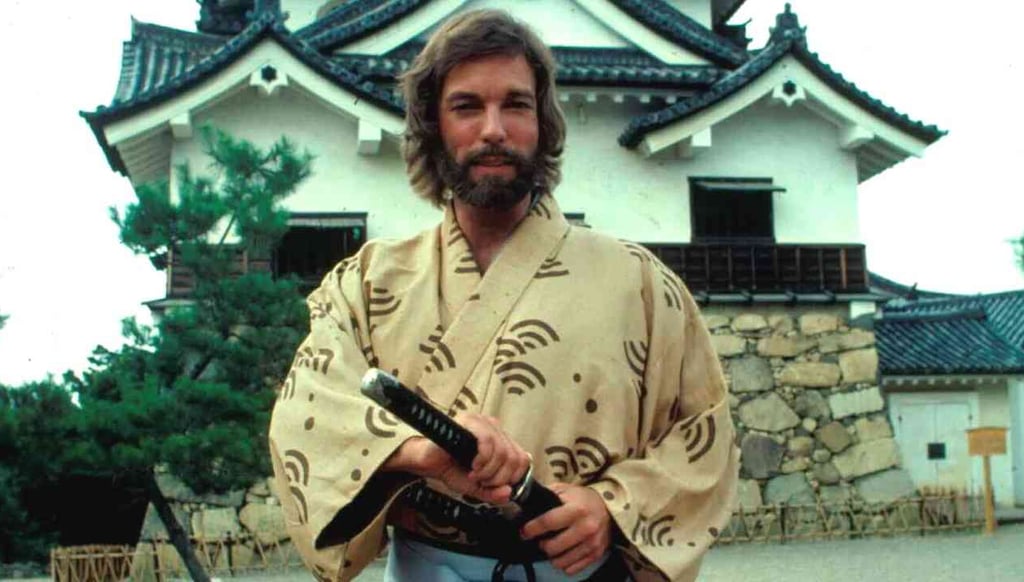
After emerging from the Korean War as a conscripted sergeant in the United States Army, he devoted himself to acting. By 1960, he was landing roles in television. These were minor roles but in rapid succession, which taught him the importance of work ethic in show business.
His professionalism paid off big the following year. He was the thirty-sixth actor to audition for the role, but immediately the studio realized that it had found a star. It cast the actor in the title role of the television program “Dr. Kildare,” making Richard Chamberlain a household name in the USA.
The program lasted five years and defined the genre of the “medical show” on television at least until “E.R.” on NBC in 1994. Dr. Kildare was filmed mostly in black and white, though some episodes were shot in full color, which was the network’s encouragement for the audience’s purchase of color television sets! Many current and upcoming actors played roles in episodes of Dr. Kildare – stars like William Shatner, Peter Faulk and Robert Redford, to name a few – such that Chamberlain became well acquainted with many of show biz’s biggest names.
Film work also came his way in abundance. He was cast alongside Katherine Hepburn in The Mad Woman of Chaillot (1969) and Charleton Heston in Julius Caesar (1970). He also got experience in live theatre in the United Kingdom, being cast in the title role of Shakespeare’s Hamlet, a very rare casting for an American actor. The production received many rave reviews.
Chamberlain’s work explored his wide range, from physically demanding roles in the disjointed The Three Musketeers (1973) and “The Count of Monte-Cristo” (1975, TV movie), to a villain in The Towering Inferno (1974), to a songful bachelor prince in the Sherman brothers’ musical The Slipper and the Rose: the Story of Cinderella (1976). In The Music Lovers (1971), Chamberlain portrayed the composer Pyotr Ilyich Tchaikovsky in czarist Russia of the late nineteenth century, struggling to repress his homosexuality in a role which would assume new meaning for Chamberlain in later years.
As a workhorse actor, Chamberlain became proficient in the format of the television miniseries, starring in several across the years; “Centennial” (1978-1979), “The Thorn Birds” (1983), “The Bourne Identity” (1988), and perhaps his best known, “Shogun” (1980), based on James Clavell’s eponymous novel and re-adapted by Fox in 2024. His dedication to the craft yielded impressive results, as he won two Golden Apple awards, three Golden Globes, three Photoplay Awards, and a star on Hollywood’s Walk of Fame in the year 2000.
As a leading man in Hollywood, the industry expected Chamberlain to arrive at movie premiers with attractive actresses on his arm. Yet it was just another role he was playing for the cameras.
In 2003, Chamberlain divulged his homosexuality in his autobiography Shattered Love. He explained that for years he struggled with inner conflict about his orientation, based on his upbringing and show business’ expectations. No longer a romantic lead in Hollywood at his advanced age, Chamberlain felt relieved at being free to be himself.
And after that cathartic divulgement, nothing. Chamberlain and his partner lived discreetly in Hawaii, first together then separately, for more than thirty years. He never harped about his orientation in public or private. In 2007 he leant into his “outed” identity with a cameo as a gay judge in the comedy I Now Pronounce you Chuck & Larry. Besides that, Chamberlain was of the mind that one’s orientation is “one of the least interesting facts you can know about a person.”
As Pride gets underway this June, one shutters to think of a world in which the contributions of someone like Richard Chamberlain would be rejected due to his orientation. Imagine if studios had refused to hire him, leaving millions of adoring fans worldwide the poorer for such prejudice.
That, more than anything, is the real reason behind Pride celebrations this month. Pride is not about celebrating orientation and identity as such, since these are private matters valuable only to those with whom one may be intimate. Pride is about willingness fairly to evaluate someone’s societal contributions, despite orientation and identity.