
A Date which Lives in Infamy
Impugning income tax
MISGOVERNMENT
Daniel Donnelly
4/15/20263 min read
Out of the numerous auditions which the actor had attended, dropping costly headshots and resumés at each, finally one called him back. He was offered a bit part on the popular soap opera “All My Children.” The pay wasn’t great, but for the actor born in Florida and raised in the Bronx, the nationwide exposure proved portentous.
Two years later, his superb conditioning from adolescent years dedicated to martial arts and sports landed him a small role in Wildcats (1986), starring Goldie Hawn. The actor got a bigger break when director Spike Lee spotted him as an extra in Michael Jackson’s video for “Bad” and cast the actor in Mo’ Better Blues (1990) alongside Denzel Washington. By the following year, the actor scored the title role as a drug lord in New Jack City, and by White Men Can’t Jump (1992), Wesley Snipes had become a household name across the English-speaking world.
More title roles would follow, each with bigger paychecks. Snipes filmed Passenger 57 (1992), Demolition Man (1993) and Drop Zone (1994), all capitalizing on Snipes’ athleticism. Not wanting to be typecast as just another action hero, Snipes also took roles which explored his range, such as an over-the-top drag queen in To Wong Foo, Thanks for Everything (1995), a repentant adulterer in One Night Stand (1997), and a feckless boyfriend in Disappearing Acts (2000). Though the USA’s leading man Harrison Ford had starred in The Fugitive (1993), Snipes was cast to star in U.S. Marshalls (1998), which was The Fugitive’s sequel in all but name, and a fitting pass of the torch to the next generation.
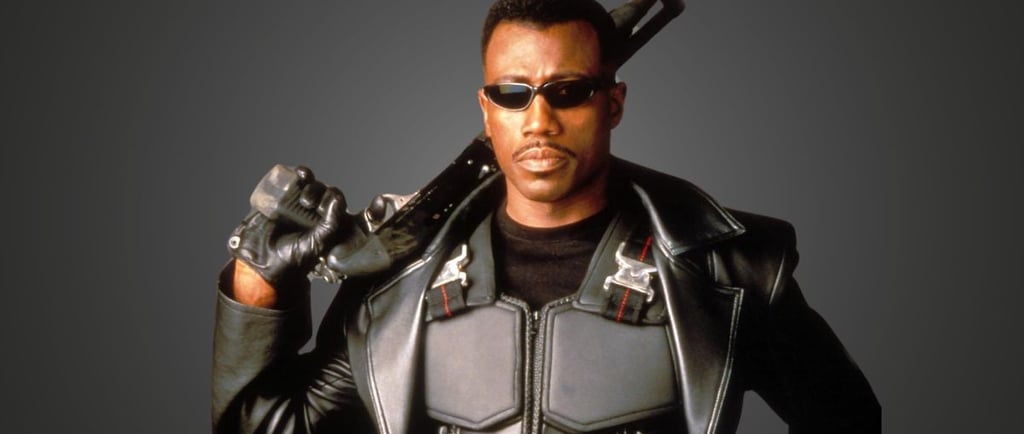
The role for which Snipes is best remembered, however, came in 1998 as the supernatural vampire-hunter Blade, considered a cult classic for the genre. Though there were rumblings that Snipes – at his career’s zenith and with massive box office clout – had become troublesome on set, the studio could and would consider no other actor for the two sequels, Blade II (2002) and Blade Trinity (2004). Snipes was awarded a star on Hollywood’s Walk of Fame, and the studios knew that any production to include him would make bank, so Snipes’ remuneration skyrocketed to the point that he was clearing around $37 million annually by the early aughts.
Another big role was soon pitched to Snipes, though initially he tried to avoid it. There was around this time a rapidly growing movement which questioned the federal income tax’ legality, so the Internal Revenue Service was seeking someone to play fall-guy to dissuade dissent. The IRS audited Snipes in 2004, claiming that he owed $7 million for fiscal years 1999 – 2003, and that he had claimed undue refunds totalling $12 million for previous filings. In a 2008 article in USA Today titled, “Wesley Snipes Trial Should Deter Anti-Tax Activists,” former IRS Commissioner Sheldon Cohen said about the case, “People who do it [tax avoidance] openly and notoriously, you’ve got to go after them. Not because he’s that important or the amount of money is that important, but because there are others who may be foolish enough to follow.” A celebrity conviction for tax evasion would certainly make a big splash, so the U.S. Justice Department ensured that it was handed down on February 1st, 2008.
In the government’s own words, according to the DoJ’s Assistant Attorney General Nathan Hochman, “Snipes’ long prison sentence should send a loud and crystal clear message to all tax defiers that if they engage in similar tax defier conduct, they face joining him… in prison.” Government’s desire for a fall-guy could be no more explicit.
Not content with having extorted Snipes for millions and suspending his promising career by 2.5 years of incarceration, the government hit Snipes when he emerged from prison with another tax bill for civil penalties amounting to $18 million! Ultimately Snipes negotiated this down to $9.5 million, which was half as much but more than Wesley Snipes should ever have had to pay to government which played no role whatsoever in his unique career’s success.
As this is Tax Day, April 15th, a date which lives in infamy, let no one be confused by government’s pretenses to the contrary. Citizens deserve every cent of their earnings from any and all income of any sort. Assistant U.S. Attorney M. Scotland Morris declaimed in closing arguments during Snipes’ trial that, “paying taxes is the price we pay to live in a civilized society,” but kidnapping citizens at gunpoint and locking them for years in cages to extort ransom is the antithesis of civilization. For all government’s lofty declarations, its claim to our income rests on nought but coercion. This may be the most liberating realization you can reach, for as the character Blade memorably said, “When you understand the nature of a thing, you know what it’s capable of.”